Comparisons
Gas vs Twin-Tube Shock Absorbers: What's the Difference?
Learn how different shock absorber designs influence ride comfort, control, and performance.
Understand the operating principles, strengths, and limitations of gas-charged and twin-tube shocks.
Quick Answer
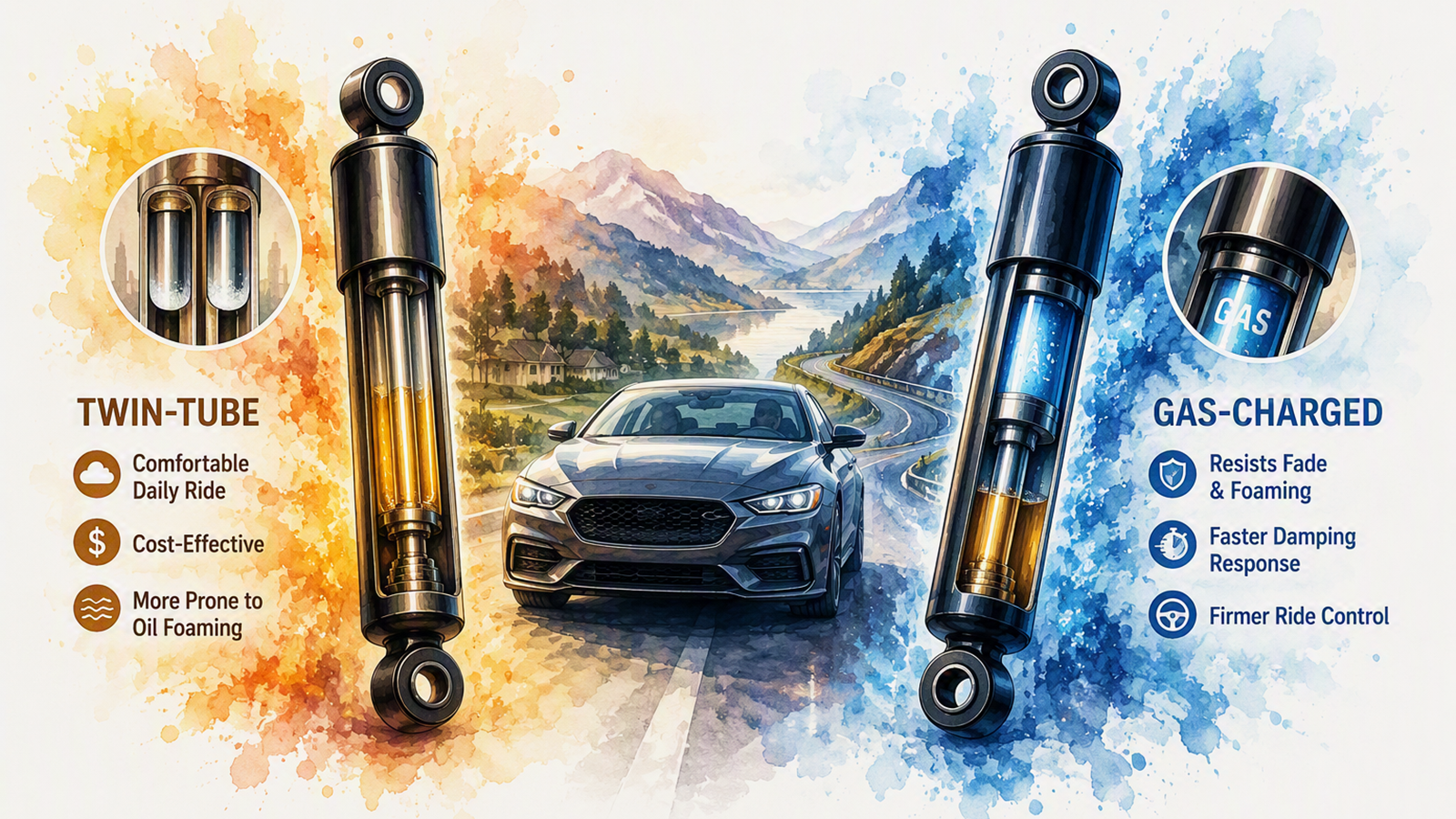
Gas-charged and twin-tube shock absorbers both serve the same basic purpose: controlling suspension movement and maintaining tyre contact with the road. The primary difference lies in their internal design. Gas-charged shocks use pressurised gas to help reduce oil aeration, while traditional twin-tube designs prioritise ride comfort and cost-effective operation. The best choice depends on the vehicle, driving conditions, desired ride characteristics, and manufacturer recommendations rather than assuming one design is always superior.
Twin-Tube Shock Absorbers
- Common on many passenger vehicles.
- Generally prioritise ride comfort.
- Often cost less than premium alternatives.
- Suitable for normal everyday driving.
Gas-Charged Shock Absorbers
- Use pressurised gas to reduce oil foaming.
- Can provide more consistent damping under demanding conditions.
- Common on performance-oriented and heavy-duty applications.
- Often offer improved control during extended use.
Key Differences
- Internal design and damping characteristics.
- Comfort versus performance emphasis.
- Heat management under repeated suspension movement.
- Vehicle-specific suitability.
Best For / Which Should You Choose?
- Choose twin-tube shocks for everyday comfort-focused driving.
- Choose gas-charged shocks for heavier use, rougher roads, or a firmer driving feel.
- Follow vehicle manufacturer fitment recommendations whenever possible.
Sources
- KYB Americas — Products and Technical Information — https://www.kyb.com
- Monroe — Technical Resources — Monroe Technical Resources [monroe.com]
FAQs
- Are gas shocks always stiffer?
- Not necessarily. Ride quality depends on the shock's overall tuning, not just whether it is gas-charged.
- Can I replace twin-tube shocks with gas shocks?
- Many vehicles allow equivalent replacement options, but compatibility should always be verified.
Still not sure what this means for your car?
Ask Foreman