How It Works
How Brake Pads and Brake Discs Work Together
Understand how brake pads and discs create the friction needed to safely slow and stop a vehicle.
Learn the braking process, component functions, and common signs of brake wear.
Quick Answer
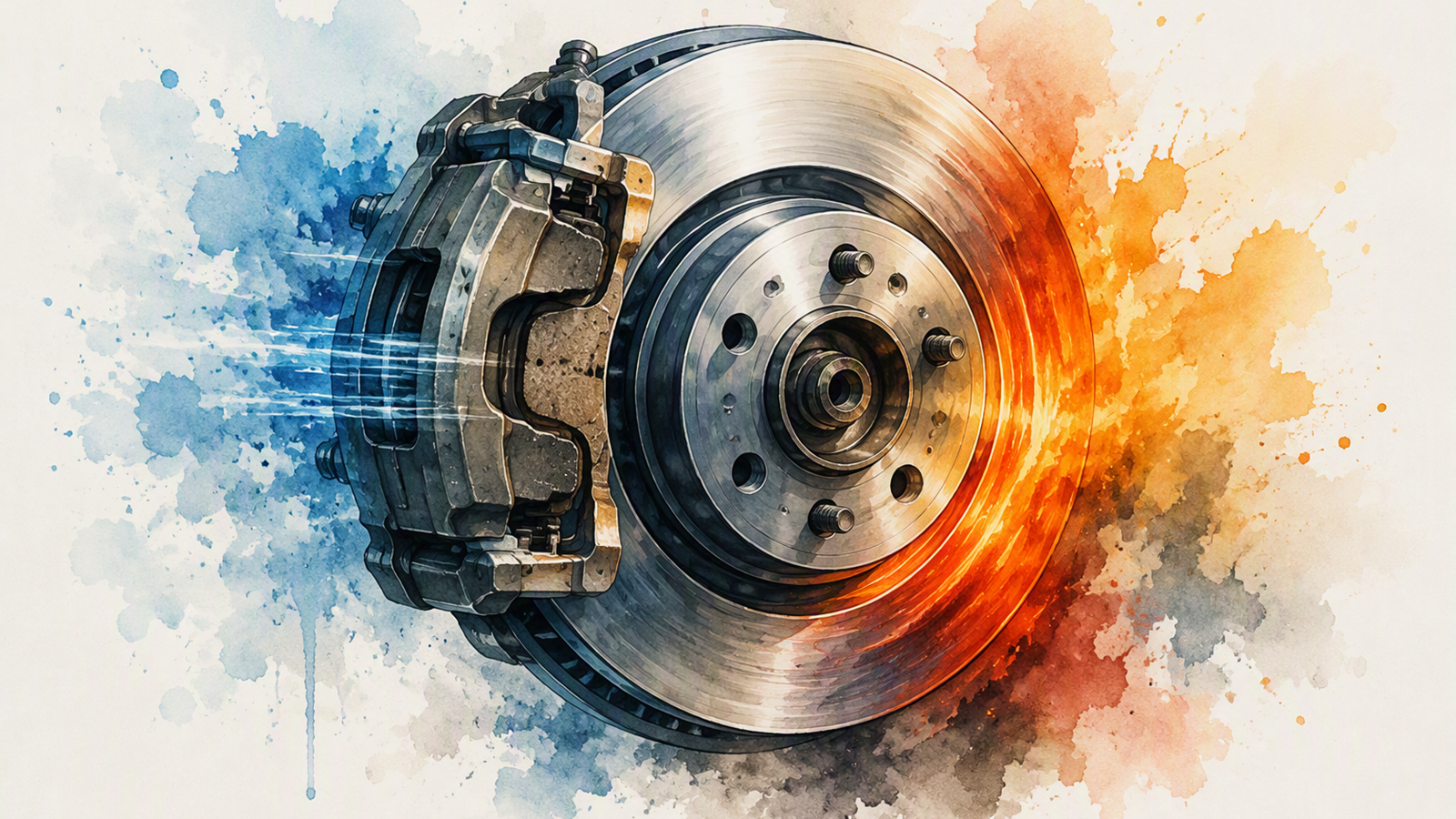
Brake pads and brake discs work together to slow or stop a vehicle by converting motion into heat through friction. When the driver presses the brake pedal, hydraulic pressure forces the brake pads against both sides of the spinning brake disc. The resulting friction reduces wheel speed and brings the vehicle to a stop. Brake pads are designed to wear gradually and are normally replaced more frequently than brake discs. Because braking performance is directly related to safety, regular inspection of both components is important.
How It Works
- Pressing the brake pedal creates hydraulic pressure.
- Brake calipers push the pads against the rotating disc.
- Friction slows the wheel's rotation.
- Heat generated during braking is dissipated through the disc and surrounding airflow.
Main Components
- Brake pads provide the friction material.
- Brake discs (rotors) rotate with the wheel.
- Brake calipers apply clamping force.
- Brake fluid transfers hydraulic pressure.
Why It Matters
- Provides controlled stopping power.
- Supports emergency braking performance.
- Helps maintain vehicle stability during deceleration.
- Contributes to overall road safety.
What Drivers May Notice
- Squealing may indicate pad wear.
- Grinding noises may indicate severely worn pads.
- Brake vibration may indicate uneven rotor wear or other braking issues.
- Longer stopping distances should be inspected promptly.
Sources
- Brembo — Brake System Technical Information — https://www.brembo.com
- Bosch Mobility Aftermarket — Brake Components and Services — https://www.boschaftermarket.com
FAQs
- Why do brake pads wear faster than brake discs?
- Brake pads are intentionally made from softer friction materials so they can be replaced more easily and economically.
- Do brake discs need replacement every time brake pads are changed?
- Not necessarily. Disc condition, thickness, and manufacturer specifications determine whether replacement is required.
Still not sure what this means for your car?
Ask Foreman