How It Works
How Car Shock Absorbers Work and Why They Matter
Understand how shock absorbers help maintain ride comfort, tyre contact, and vehicle stability over uneven roads.
Learn how shocks work, their main components, common wear signs, and why they affect safety and handling.
Quick Answer
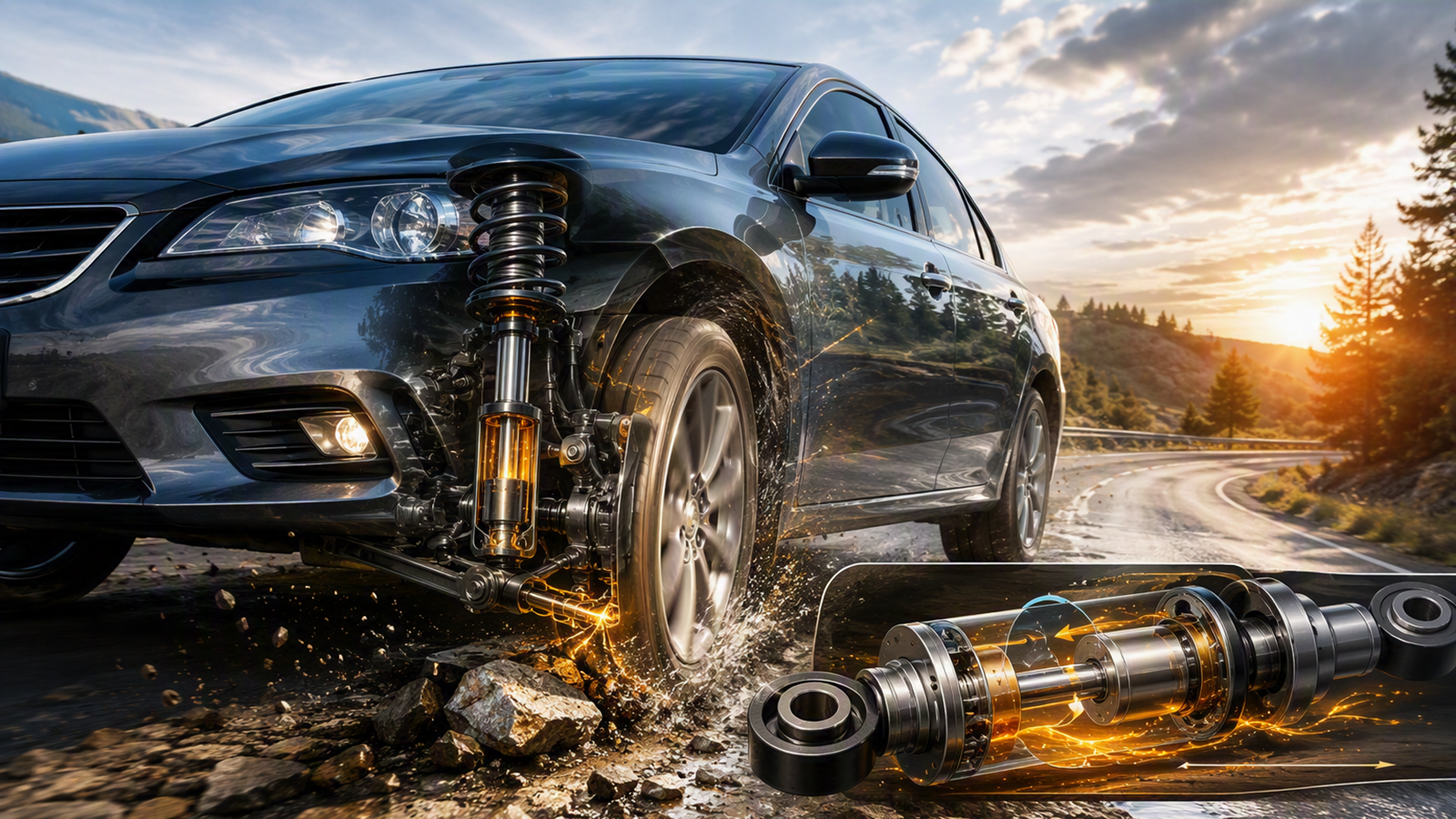
Shock absorbers help control the movement of a vehicle's springs after the car hits a bump, pothole, or uneven road surface. While springs absorb the initial impact, shock absorbers prevent the vehicle from continuing to bounce. By controlling how quickly the suspension compresses and rebounds, they help keep the tires in contact with the road. This improves braking performance, steering stability, ride comfort, and overall vehicle control. Modern vehicles rely on properly functioning shock absorbers to maintain predictable handling in daily driving, especially during sudden braking, cornering, or driving on rough Malaysian roads.
How It Works
- When a wheel moves over a bump, the suspension spring compresses and stores energy.
- The shock absorber slows the spring's movement by forcing oil through internal valves.
- This converts motion into heat, which is then dissipated through the shock body.
- The process controls both compression (when the wheel moves upward) and rebound (when the suspension extends again).
Main Components
- Piston and piston rod – move inside the shock absorber as the suspension travels.
- Hydraulic oil – provides resistance to movement.
- Valving system – controls oil flow and determines damping characteristics.
- Gas charge (on some designs) – helps reduce oil foaming and maintain consistent performance.
Why It Matters
- Maintains tire contact with the road surface.
- Reduces excessive body roll, dive, and squat.
- Improves stability during emergency manoeuvres.
- Helps reduce wear on suspension and steering components.
- Contributes to a more comfortable ride for passengers.
What Drivers May Notice When Shocks Wear Out
- Excessive bouncing after bumps.
- Nose-diving during braking.
- Increased body roll when cornering.
- Uneven tyre wear.
- Reduced confidence at highway speeds.
Sources
- KYB Americas — Shock Absorber Installation Guide — KYB Shock Absorber Installation Guide [kyb.com]
- Monroe — Shock & Strut Installation Guides — Monroe Technical Resources
FAQs
- Do shock absorbers support the vehicle's weight?
- No. The vehicle's weight is primarily supported by the springs. Shock absorbers control spring movement.
- Can worn shock absorbers affect braking?
- Yes. Reduced tyre contact with the road can increase stopping distances, especially on uneven surfaces.
Still not sure what this means for your car?
Ask Foreman