How It Works
How Disc Brakes Work
A plain-language look at calipers, pads, and rotors, and how they bring your car to a stop.
Quick Answer
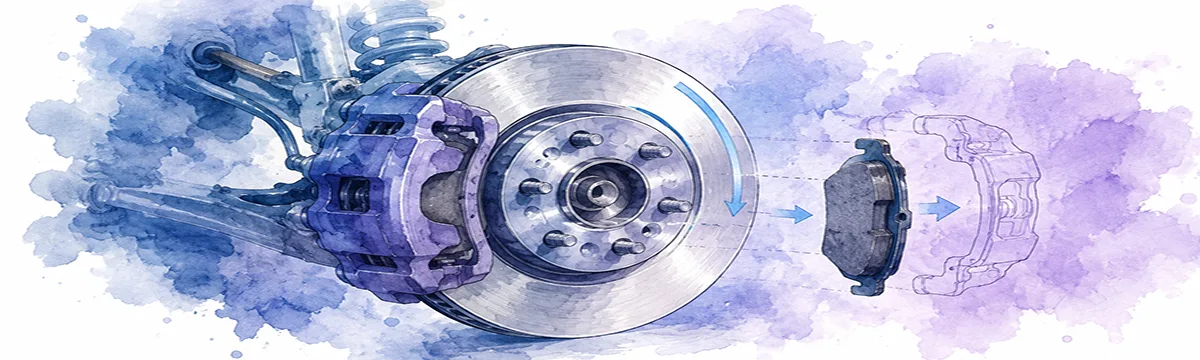
Disc brakes slow a car by clamping a spinning metal rotor between two friction pads. Pressing the brake pedal pushes hydraulic fluid into the caliper, which squeezes the pads against the rotor, converting the car's motion into heat through friction. The harder the pedal is pressed, the more clamping force is applied, and the faster the car slows.
What a disc brake is made of
A disc brake system has three main parts: a rotor (a metal disc bolted to the wheel hub), a caliper (which holds the brake pads and straddles the rotor), and pads (friction material that presses against the rotor). Together they turn the car's forward motion into heat, which is what actually slows the vehicle down.
Why disc brakes are widely used
- Consistent stopping power, even after repeated hard braking
- Better heat dissipation than drum brakes, reducing brake fade
- Simpler to inspect — pads and rotors are visible without disassembly
- Perform predictably in wet conditions
Products That May Help
FAQs
- Why do disc brakes squeal sometimes?
- Squealing is most often caused by brake dust, glazed pads, or a worn wear indicator making contact with the rotor. It is usually a sign the pads should be inspected.
- Do all four wheels use the same type of disc brake?
- Not always. Many cars use larger, more powerful disc brakes at the front and smaller discs — or drum brakes — at the rear, since front brakes handle most of the stopping force.
Still not sure what this means for your car?
Ask Foreman