Maintenance
What Car Fluids Should You Check Regularly?
Find out which vehicle fluids should be monitored regularly to help prevent breakdowns and costly repairs.
Learn the purpose of key automotive fluids and how routine checks support vehicle reliability.
Quick Answer
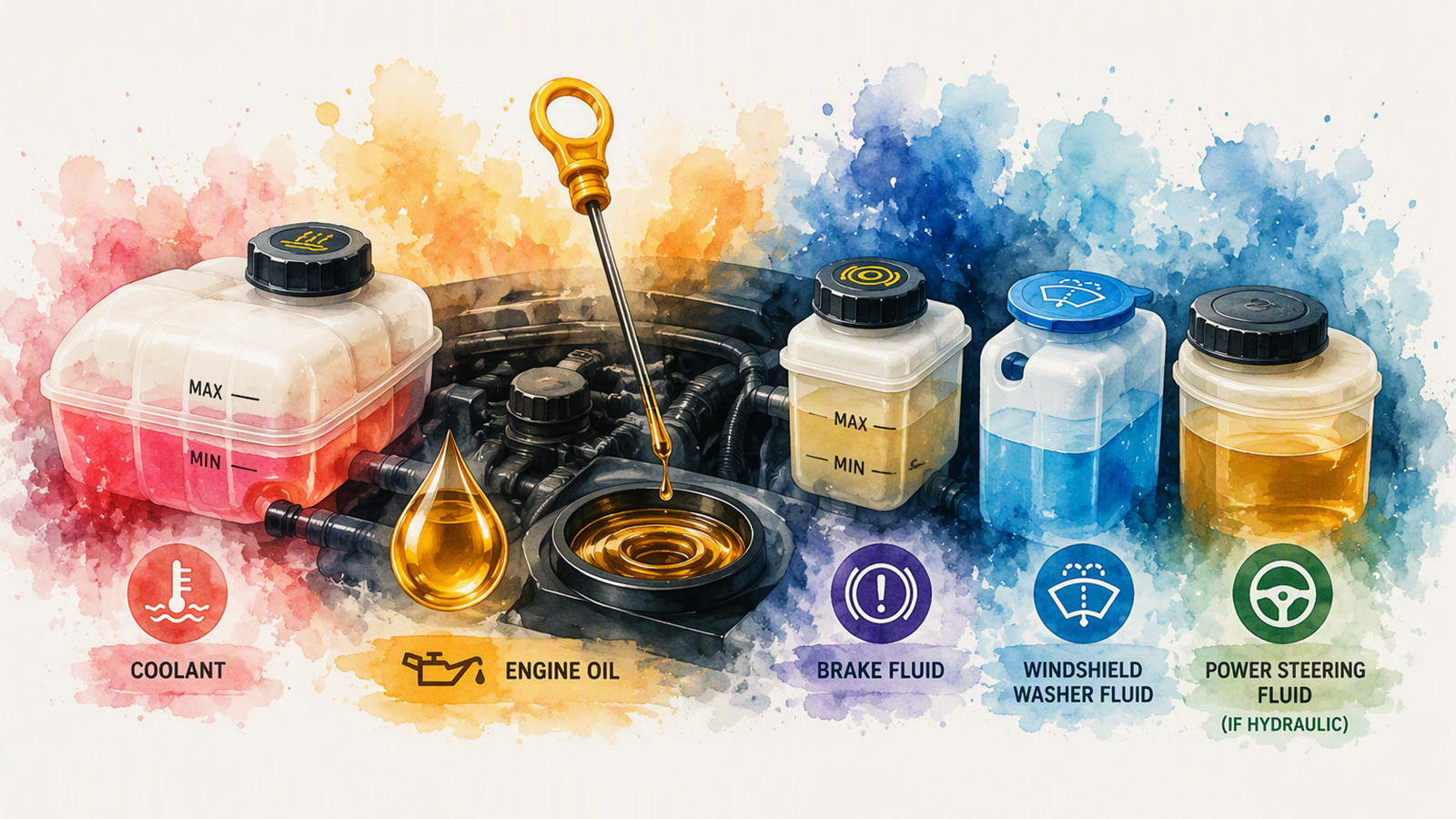
Regular fluid checks are one of the simplest ways to help prevent breakdowns and identify developing mechanical problems. Many vehicle systems rely on fluids for lubrication, cooling, hydraulic operation, or cleaning. Low fluid levels can indicate normal consumption, neglected maintenance, or potential leaks. Checking key fluids regularly allows drivers to spot problems early and maintain vehicle reliability. The exact fluids present depend on the vehicle, as some modern cars use electric power steering or sealed transmissions that reduce routine fluid checks.
Engine Oil
- Lubricates internal engine components.
- Check level according to the owner's manual.
- Investigate unusually low levels.
Coolant
- Helps control engine temperature.
- Check reservoir level when the engine is cool.
- Never remove a hot radiator cap.
Brake Fluid
- Transfers braking force.
- Monitor reservoir level.
- Investigate sudden fluid loss immediately.
Windscreen Washer Fluid
- Maintains visibility.
- Keep topped up, especially before long journeys.
Power Steering Fluid (Where Applicable)
- Found on vehicles with hydraulic power steering systems.
- Low levels may indicate a leak.
What to Do
- Check fluids regularly.
- Follow manufacturer recommendations.
- Use the correct fluid specifications.
- Investigate leaks promptly.
Sources
- Castrol — Vehicle Maintenance & Fluids Information — https://www.castrol.com
- Shell — Car Care and Fluids Information — https://www.shell.com/motorist.html
- Vehicle owner manuals and scheduled maintenance guides.
FAQs
- How often should fluid levels be checked?
- Many drivers inspect them monthly and before long road trips.
- Can I top up fluids with any available product?
- No. Always use fluids that meet the vehicle manufacturer's specifications.
Still not sure what this means for your car?
Ask Foreman