Maintenance
When Should You Replace Your Car's Shock Absorbers?
Learn how to identify worn shock absorbers before they affect handling, comfort, and safety.
Understand common wear symptoms, inspection points, and factors that influence shock lifespan.
Quick Answer
Shock absorbers wear gradually, which means many drivers do not notice deteriorating performance until ride quality and vehicle control have already been affected. There is no universal replacement mileage because road conditions, vehicle weight, driving habits, and component quality all influence service life. Instead of focusing solely on mileage, drivers should monitor vehicle behaviour and inspect suspension components during routine servicing. Replacing worn shock absorbers helps maintain tyre contact, braking stability, ride comfort, and predictable handling.
When to Check or Replace
- Inspect during routine maintenance.
- Check more frequently on vehicles driven on rough roads.
- Replace when excessive wear or leakage is evident.
- Follow any manufacturer inspection recommendations.
Signs of Wear
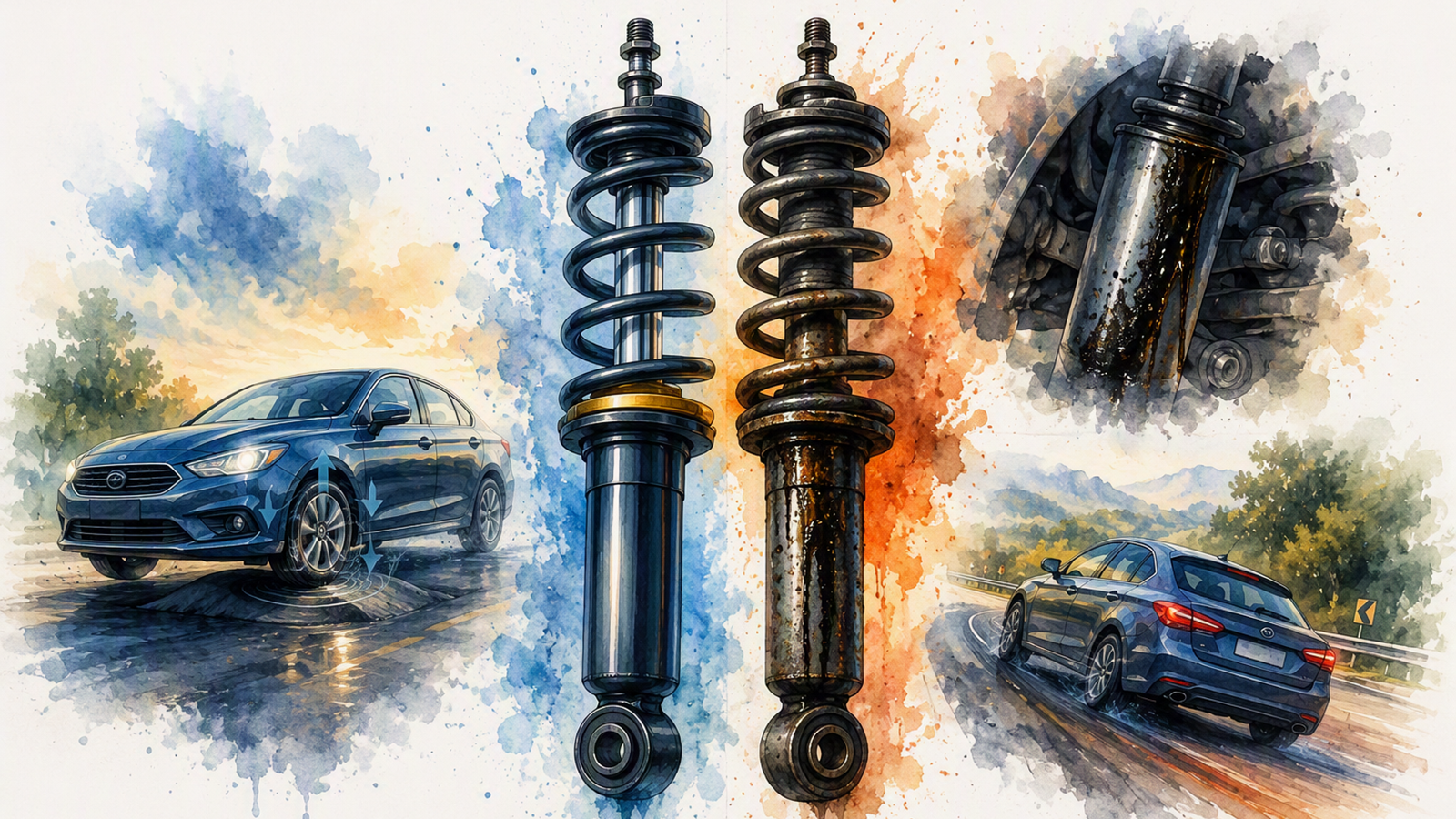
- Excessive bouncing after bumps.
- Oil leakage on the shock body.
- Increased body roll during cornering.
- Nose-diving during braking.
- Uneven tyre wear patterns.
What Affects Service Life
- Road quality.
- Vehicle load.
- Driving style.
- Climate and operating conditions.
What to Do
- Inspect shocks in pairs on the same axle.
- Check related suspension components at the same time.
- Address handling concerns before they become safety issues.
Sources
- KYB Americas — Shock Absorber Installation Guide — https://www.kyb.com/resource/installation-guide/shock-absorber-installation-guide/ [kyb.com]
- Monroe — Technical Resources & Installation Guides — https://www.monroe.com/technical-resources/installation-guides.html
FAQs
- Should shock absorbers be replaced in pairs?
- Yes. Replacing both shocks on the same axle helps maintain balanced handling and suspension performance.
- Can worn shocks affect tyre wear?
- Yes. Reduced control of wheel movement can contribute to uneven tyre wear.
Still not sure what this means for your car?
Ask Foreman