Troubleshooting
Why Does My Car Feel Bouncy Over Bumps?
A bouncy ride often indicates reduced suspension damping and can affect vehicle control.
Learn the common causes of excessive bouncing and how to identify suspension-related issues.
Quick Answer
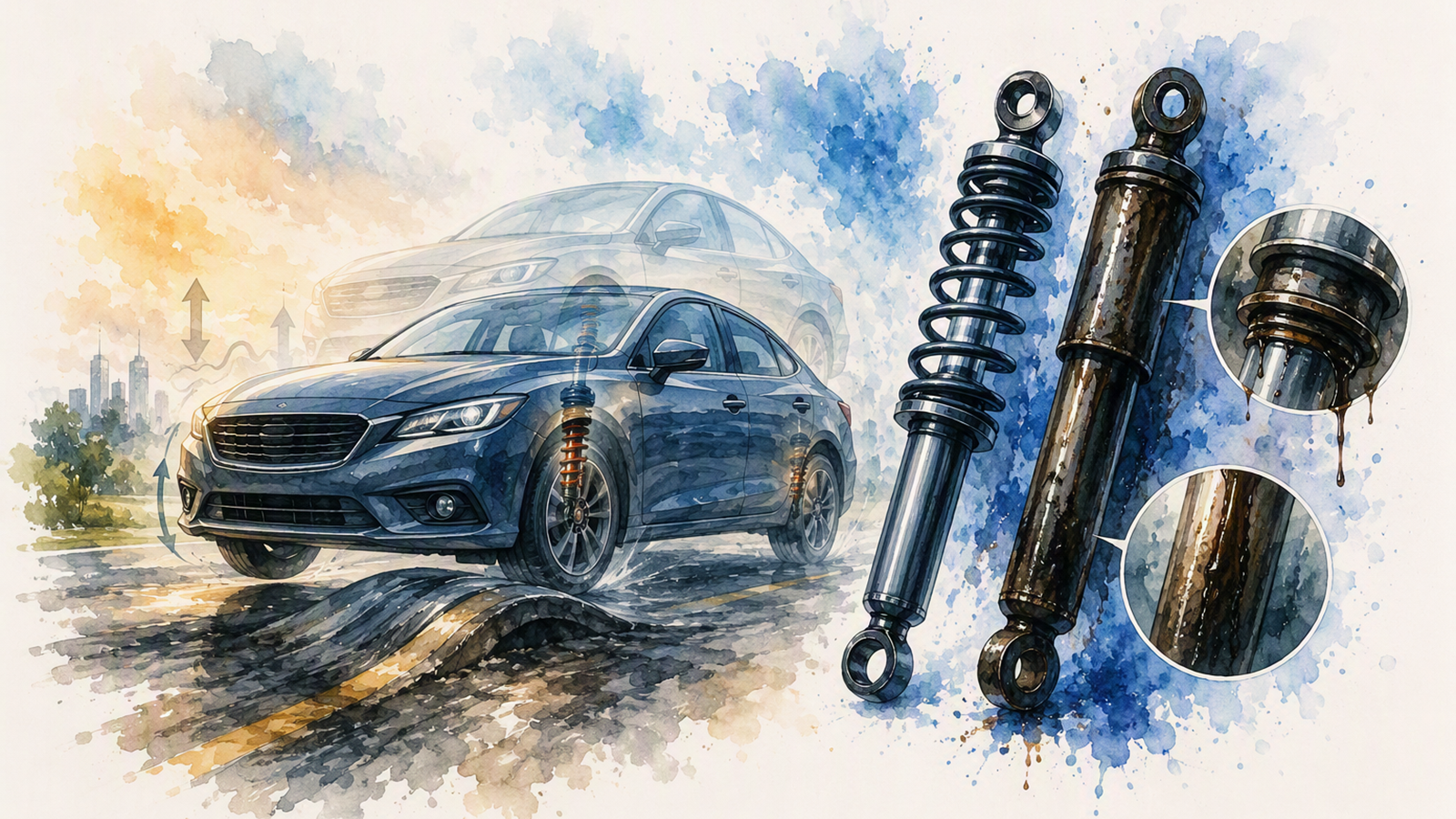
A car that continues bouncing after driving over bumps often has reduced damping control in the suspension system. The most common cause is worn shock absorbers or struts that can no longer control spring movement effectively. When this happens, the tyres may spend less time in firm contact with the road surface, reducing stability and driver confidence. While suspension design naturally affects ride comfort, excessive bouncing should not be considered normal and is worth investigating.
Likely Causes
- Worn shock absorbers or struts.
- Internal damper wear.
- Loss of damping fluid due to leakage.
- Damaged suspension mounting components.
What to Check
- Inspect shocks for oil leakage.
- Observe whether the vehicle continues bouncing after a bump.
- Check for unusual suspension noises.
- Inspect tyres for uneven wear.
What the Symptoms May Tell You
- Bouncing after bumps often points to damping issues.
- Excessive body movement during braking may indicate worn shocks.
- Increased sway during cornering can signal suspension wear.
When to Get Professional Help
- Visible shock absorber leakage.
- Unstable handling.
- Persistent bouncing.
- Suspension-related noises.
Sources
- KYB Americas — Shock Absorber Installation Guide — KYB Guide [kyb.com]
- Monroe — Technical Resources & Installation Guides — Monroe Technical Resources [monroe.com]
FAQs
- Can tyre pressure cause a bouncy ride?
- Incorrect tyre pressure can affect ride comfort, but excessive bouncing is more commonly associated with suspension damping issues.
- Is it safe to continue driving?
- The vehicle may remain drivable, but worn suspension components can reduce braking and handling performance.
Still not sure what this means for your car?
Ask Foreman