Troubleshooting
Why Does My Steering Wheel Vibrate at Highway Speed?
Steering wheel vibrations at speed can point to tyre, wheel, or suspension-related problems.
Learn how to identify likely causes and understand what different vibration symptoms may indicate.
Quick Answer
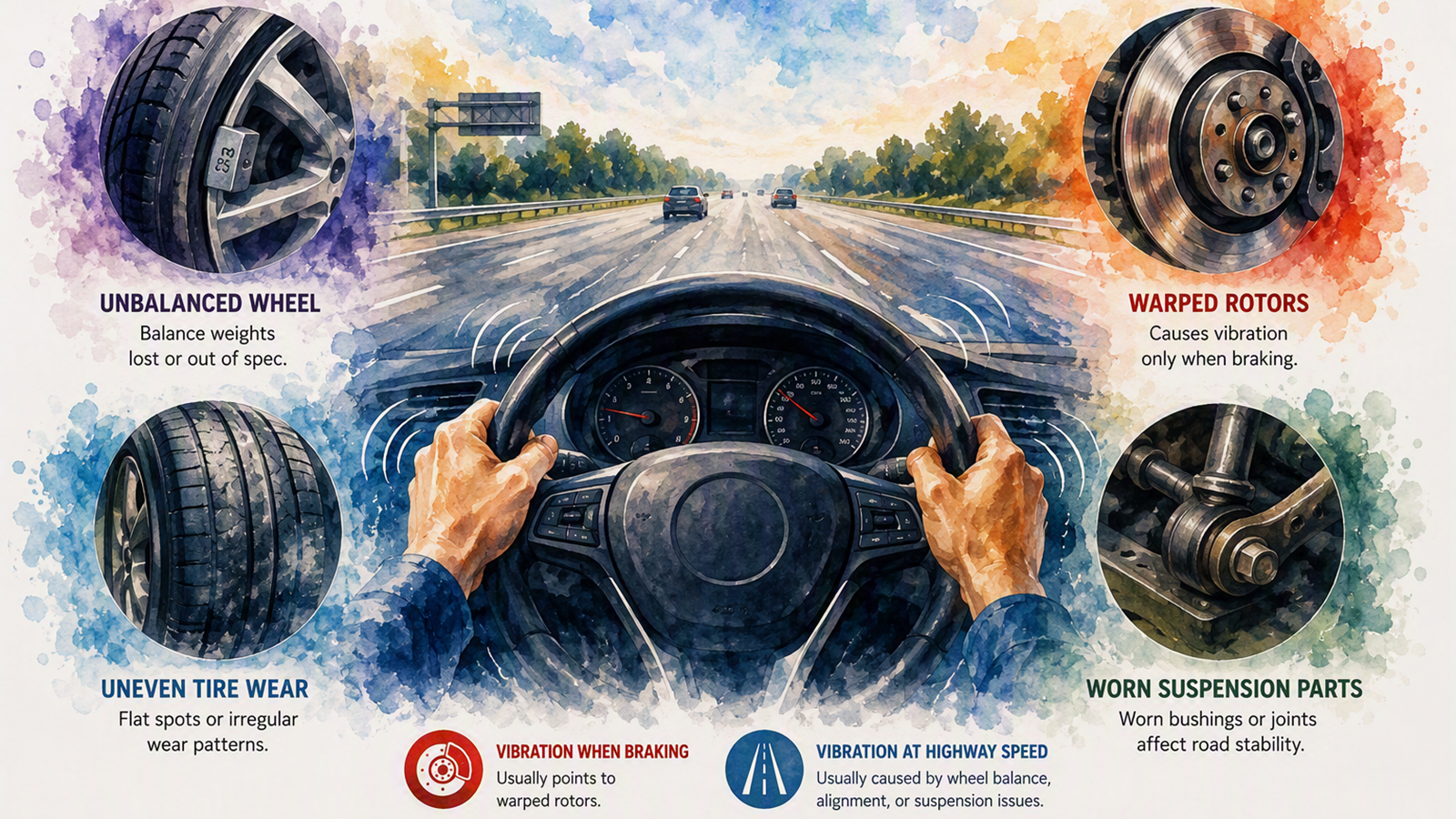
Steering wheel vibration at higher speeds is often related to wheel and tyre issues, although suspension, steering, and braking components can also contribute. Because vibrations tend to become more noticeable as vehicle speed increases, the source is commonly tied to rotating components such as tyres, wheels, or hubs. Identifying when the vibration occurs—during cruising, braking, or acceleration—can help narrow down the cause.
Likely Causes
- Wheel balancing issues.
- Uneven tyre wear.
- Damaged tyre construction.
- Bent wheel rims.
- Worn suspension or steering parts.
What to Check
- Inspect tyres for uneven wear.
- Check for missing wheel balance weights.
- Look for wheel damage.
- Inspect suspension and steering components.
What the Symptoms May Tell You
- Vibration during cruising often points to tyre or wheel concerns.
- Vibration only during braking may indicate brake rotor issues.
- Vehicle-specific speed ranges can help identify balancing problems.
When to Get Professional Help
- Vibrations increase over time.
- Tyres show unusual wear.
- Steering stability is affected.
- Wheel balancing does not resolve the issue.
Sources
- Michelin — Tyre Wear and Vehicle Handling Resources — https://www.michelin.com.my/auto/advice
- Bridgestone — Tyre Care and Maintenance — Bridgestone
FAQs
- Can wheel balancing fix vibration?
- Yes, if the root cause is an imbalance in the wheel and tyre assembly.
- Can worn tyres cause vibration even if they still have tread?
- Yes. Uneven wear patterns or tyre damage can create vibration even when tread depth remains legal.
Still not sure what this means for your car?
Ask Foreman